
The desert states have long attracted homeowners with their stunning landscapes, abundant sunshine, and unique architectural elements. From the Sonoran Desert to the Mojave, this region of the country offers a distinctive lifestyle, but also presents a combination of risks that every homeowner should be aware of.
Table of Contents:
- Extreme heat and sun exposure
- Monsoon season and flash flooding
- Wildfire threats
- Dust storms and wind damage
- Desert wildlife and pest damage
- Protecting your home
At a glance:
- Extreme heat can cause significant wear and tear to roofs, HVAC systems, and exterior materials, leading to increased maintenance costs.
- Desert wildlife—including termites, scorpions, and rodents—can cause substantial property damage that may not be covered under standard policies.
- Regular policy reviews are essential, as improvements are made and new personal belongings are acquired.
1. Extreme heat and sun exposure
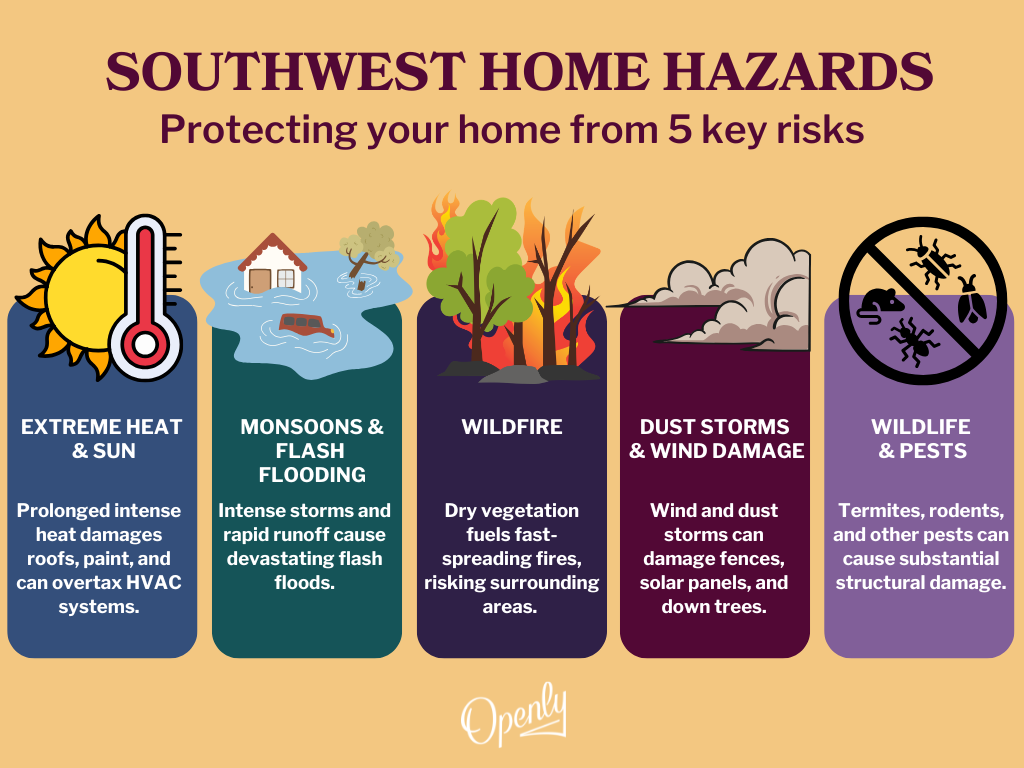
Unlike other parts of the country that deal with drastic seasonal temperature variations, the desert states experience prolonged periods of intense heat and direct sun exposure—both of which can take a serious toll on homes. Summer temperatures can exceed 115°F in many areas1, creating unique challenges for homeowners in Nevada, Arizona, and surrounding states.
The constant exposure to extreme temperatures can accelerate a number of issues:
- Deterioration of roofing materials
- Cause materials like Spanish tile roofs to crack, warp, and fail prematurely
- Damage to paint, stucco, window seals, and garage doors
- Over-taxing air conditioning systems, leading to increased wear and higher utility costs
What to do to prevent heat damage
To protect their properties, homeowners should:
- Schedule regular roof inspections to identify cracks, warping, or UV damage
- Consider heat-reflective roofing materials to reduce surface temperatures
- Regularly maintain HVAC systems with professional servicing
- Replace air filters regularly
Homeowners should also review policies to understand coverage for heat-related damage. Typically, wear and tear is not covered, but sudden failures or heat-related incidents might be, depending on your specific policy.
2. Monsoon season and flash flooding
A common misunderstanding of desert living is the real threat of water damage. While the Southwest is known for its arid climate, monsoon season—typically running July through September2—brings thunderstorms, intense rainfall, and dangerous flash flooding to the region.
Sun-baked hard desert soil cannot absorb water quickly. When monsoons dump inches of rain in minutes, the result can be devastating. Flash floods can sweep away vehicles, damage homes, and overwhelm drainage systems. Thunderstorms can also bring damaging winds, lightning strikes, and on occasion, hail.
It's important for homeowners to know that standard homeowners insurance policies typically do not cover flood damage.
Preventing water and flood damage
Don't assume your home is safe from water damage because you live in the desert. While you can’t predict flash flooding, flood insurance is available through the National Flood Insurance Program (NFIP) or through some private insurers.
Fortunately, homeowners can take steps to minimize water and flood damage:
- Make sure your property has proper grading and drainage
- Keep gutters and downspouts clear and consider extending downspouts away from your foundation
- Consult with a flood mitigation professional if your home is located near a wash or low-lying area
Personal safety should come first and foremost. During monsoons, it’s critical that you never drive or walk through flowing water. Be sure to keep emergency supplies on hand and know your evacuation routes if you live in flood-prone areas.
3. Wildfire threats
Wildfires are a serious concern across the desert Southwest. There is a misconception that wildfires are typically restricted to forested regions, but the reality is that desert vegetation like buffelgrass, invasive grass species, and Palo Verde trees can fuel the spread of fire.3
Communities across Nevada and Arizona have experienced devastating wildfires, particularly in communities surrounded by native vegetation. Strong winds can rapidly spread fires; a single ember landing on a wood shake roof or in dry vegetation can ignite a new fire, making homes vulnerable—even when the main fire front appears distant.
Preparing for wildfire risk
To proactively protect their homes from wildfires, homeowners can take the following steps:
- Create a defensible space around your home by clearing vegetation near the structure
- Replace flammable landscaping materials like wood chips with gravel or rock
- Keep trees and shrubs trimmed and watered during fire season
- Use fire-resistant building materials (when possible), such as metal or tile roofs
Some areas that are at especially high-risk of wildfire have seen insurance companies non-renew policies or increase premiums, as was seen in California in January 2025. Working with an independent insurance agent familiar with your region can help you find the right coverage—even in challenging markets.
4. Dust storms and wind damage
Massive dust storms are notorious in the desert. These are especially common in Arizona and Nevada during both the monsoon season and dry periods. Dust storms create hazardous driving conditions and can significantly damage property.
Dust storms are made of fine particles that can infiltrate homes through the smallest cracks and crevices, damaging HVAC systems, coating solar panels, and even reducing indoor air quality. The winds that drive these storms can damage roofs, rip off shingles or tiles, knock down walls and fences, and send debris flying into homes and vehicles.
Preventing wind and dust damage
Dust storms are just one reason why it’s important to seal gaps around windows and doors with weatherstripping (water and pest damage being two others). Homeowners should also inspect roof tiles, shingles, and flashing to make sure they are secure, and anchor outdoor furniture and decorations, or bring them indoors during high wind warnings.
Homeowners should also:
- Trim dead branches from trees and remove dead vegetation to prevent them from becoming wind-borne
- Maintain the structural integrity of block walls during high winds
- Schedule regular inspections of solar panels or solar shingles
- Review your policy’s wind and hail deductibles
5. Desert wildlife and pest damage
The desert ecosystem can bring homeowners into close contact with wildlife and pests that can cause property damage:
- Termites can go undetected until substantial damage has occurred
- Rodents often seek shelter in homes, particularly during extreme weather, where they can chew through electrical wiring, insulation, and even structural materials
- Scorpions are attracted by pests and can indicate existing pest problems—as well as pose a substantial safety concern
- Ground movements and settling can crack foundations and slabs, providing entry points for pests
Preventing pest and wildlife damage
Many standard homeowners insurance policies do not cover damage caused by insects, rodents, or other pests, which is why it’s important to review your specific policy’s coverages and exclusions.
Prevention is essential to avoid out-of-pocket repairs. Homeowners should:
- Schedule annual inspections for termites, as damage accelerates quickly
- Seal cracks and gaps around your home’s exterior
- Repair damaged screens and install door sweeps
- Keep firewood, lumber, and debris away from your home's foundation
- Inspect your attic and crawl spaces for signs of rodent infestations or pest activity
Protecting your home
Understanding hazards is only the first step in protecting a home in the desert Southwest. Here are practical actions every regional homeowner should consider:
- Address small issues before extreme weather makes them catastrophic.
- Maintain a detailed home inventory and store important documents such as insurance policies and receipts for valuable items in a fireproof and waterproof safe.
- An annual policy review with your insurance agent helps prevent coverage gaps.
- Understand your coverage limits and make sure deductibles are amounts you can afford to pay out-of-pocket.
- Depending on circumstances, homeowners may benefit from additional coverage such as flood insurance, equipment breakdown, and water backup coverage.
The right insurance policy is more than just a requirement. It's a safety net that allows you to enjoy your home without stressing over what ifs.
We at Openly are committed to helping homeowners understand their risks and connecting them with coverage that meets their needs. To learn more, get a quote, or find a local independent agent near you who can help ensure greater security for you and your home, visit Openly.com today.
Weprovide this information to help you understand insurance. Any coverage is subject to the terms of your policy. Please refer to your policy and declarations page for complete terms, conditions, exclusions and coverage details. Openly may provide links that lead to an external website that may promote goods and services that Openly does not endorse. We are not responsible for the content, claims, or representations made on the linked website. Please review their terms and policies before engaging with any offerings.
1 Arizona State Climate Office. “Climate of Arizona.” Julie Ann Wrigley Global Futures Laboratory, Arizona State University. Accessed 10 February 2026. https://globalfutures.asu.edu/azclimate/climate/
2 National Park Service. “Monsoon Season.” National Park Service. Updated 19 August 2025. Accessed 10 February 2026. https://www.nps.gov/articles/monsoon-season.htm
3 Amy McDermott. “Fire in the Desert - PMC.” Proceedings of the National Academy of Sciences of the United States of America. Published 13 March 2024. Accessed 10 February 2025. https://pmc.ncbi.nlm.nih.gov/articles/PMC10962942/