
A small drip behind a bathroom wall or a slow leak from a water heater can cause thousands of dollars in water damage before anyone notices. The challenge is that many water leaks happen in hidden areas where they can cause damage for weeks or months before becoming visible. Fortunately, strategically placed water sensors can alert homeowners before water leaks result in costly repairs or extensive damage.
Table of Contents:
- What are water sensors and how do they work?
- Where to install water sensors in your home
- Standard vs. wifi-enabled water sensors
- How water sensors can support home insurance and protection
- Common types of water damage sensors help prevent
- Tips for maximizing the benefits of water sensors
- Stop water damage before it happens
- FAQs about water sensors
At a glance:
- Water sensors can detect leaks within seconds, giving homeowners a critical window to act before minor drips turn into major damage.
- Strategic installation of water sensors under sinks, near appliances, and in basements targets the spots where leaks are most likely to go unnoticed.
- Catching a leak early can mean the difference between a simple plumbing fix and thousands of dollars in drywall, flooring, and mold remediation costs.
What are water sensors and how do they work?
Water sensors are devices designed to detect the presence of water in places where it shouldn't be. When moisture or standing water comes into contact with the sensor's detection points, the device triggers an alert to notify you of the problem.
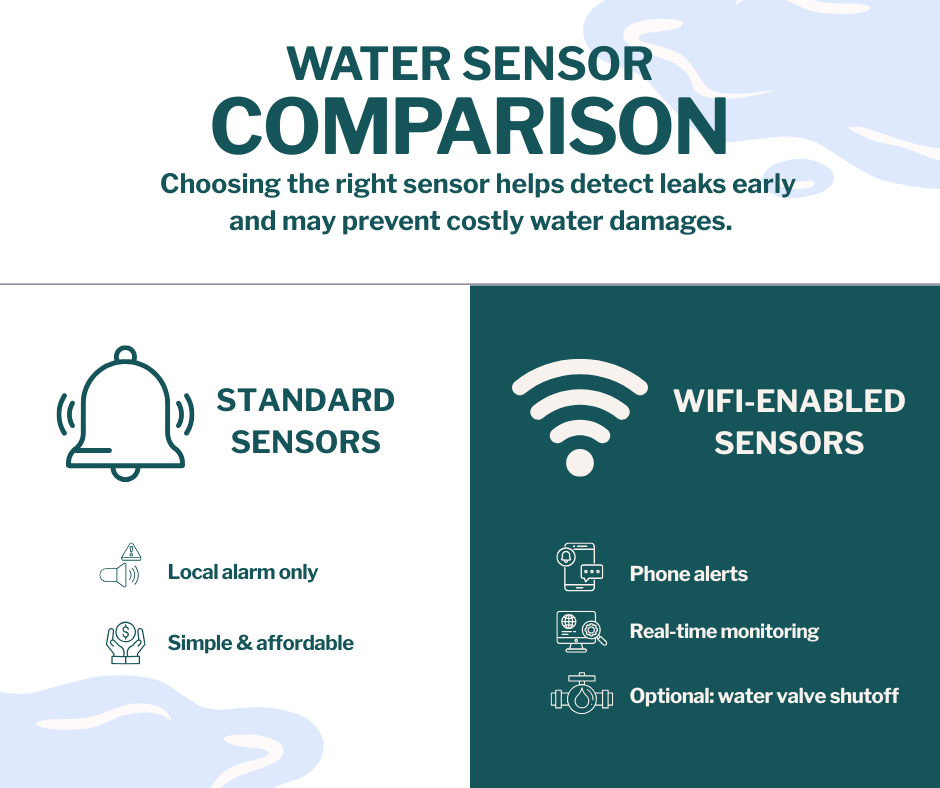
Water sensors come in two main types, each with distinct capabilities:
- Standard water sensors—These battery-powered devices emit a loud alarm when they detect water. However, they won't notify you if you're away from home.
- WiFi-enabled water sensors—These are smart detectors that connect to your home network and send alerts directly to your smartphone. Some models integrate with smart home platforms, allowing you to automate responses like shutting off water valves when a leak is detected.
The basic functionality is consistent across both types: metal contacts or probes on the sensor detect moisture or water. Once triggered, standard sensors sound an alarm, while WiFi sensors send notifications through connected apps.
Where to install water sensors in your home
Install water sensors in areas where leaks are most likely to occur and where water damage could go unnoticed for extended periods, including:
- Under sinks and inside cabinets
- Near water heaters
- Around washing machines
- Near dishwashers
- Basements and crawl spaces
- Laundry rooms and utility areas
The key principle is to place sensors where leaks might go unnoticed for extended periods.
Standard vs. wifi-enabled water sensors
Choosing between standard and WiFi-enabled water sensors depends on your lifestyle, budget, and home protection priorities.
When water triggers a standard water leak sensor, it emits a loud alarm similar to a smoke detector, and are:
- Affordable
- Simple to install with no setup required
- Effective if someone is home
WiFi-enabled water sensors connect to your home network and send alerts to your smartphone, tablet, or computer, offering:
- Real-time notifications
- Integration with smart home platforms
- Ability to trigger automated responses, such as shutting off water valves
- Water usage tracking and abnormal flow detection in advanced models
For tech-savvy homeowners or those concerned about protecting their property investment, WiFi-enabled sensors are often worth the additional cost. However, standard sensors remain a practical, budget-friendly option for homeowners who are frequently home or who want basic leak detection.
How water sensors can support home insurance and protection
The primary insurance benefit of water sensors isn't potential premium savings—it's damage prevention. Water damage claims are among the most common and costly homeowners insurance claims. By catching leaks early, sensors help you avoid filing claims in the first place, which keeps your claims history clean and can prevent premium increases that often follow multiple claims.
Combining sensors with other protective measures—like regular plumbing maintenance, proper home inspections, and smart home automation—creates a comprehensive protection strategy that both reduces risk and demonstrates your commitment to responsible homeownership.
Common types of water damage sensors help prevent
Water sensors protect against multiple categories of water damage:
- Burst pipes and plumbing leaks
- Appliance malfunctions
- Basement and crawl space flooding
- Slow, hidden leaks
- Water supply line failures
A small leak caught within hours might require only minor cleanup and a simple plumbing repair. The same leak discovered days or weeks later could necessitate drywall replacement, floor refinishing, mold remediation, and structural repairs.
Tips for maximizing the benefits of water sensors
Installing water sensors is just the first step. Here's how to get the most from your leak detection system:
- If you have WiFi-enabled sensors, connect them to your smart home platform. Set up automated responses like shutting off the main water valve when a leak is detected, or having smart plugs cut power to water heaters or washing machines.
- Test each water sensor every three to six months.
- Consider installing an automatic water shutoff valve at your main water line.
- If you have advanced sensors that track water usage, pay attention to consumption data.
- Know where your main water shutoff valve is located and ensure all household members can operate it. Create a list of emergency contacts and water damage restoration services.
Stop water damage before it starts
Home water sensors represent a smart investment in protecting your property from one of the most common and costly types of damage homeowners face. By detecting leaks early—often within seconds of water appearing—these devices give you the opportunity to respond before minor problems escalate into major disasters. Whether you choose basic alarm-style sensors or sophisticated WiFi-enabled systems with smart home integration, leak detection technology provides peace of mind and financial protection.
Combining water leak detection with high-value home insurance coverage creates the complete protection you deserve. Openly's homeowners insurance is designed for modern homeowners who value tailored, personalized protection. Check out Openly.com to learn more, get a quote, or find an independent agent near you.
FAQs about water sensors