
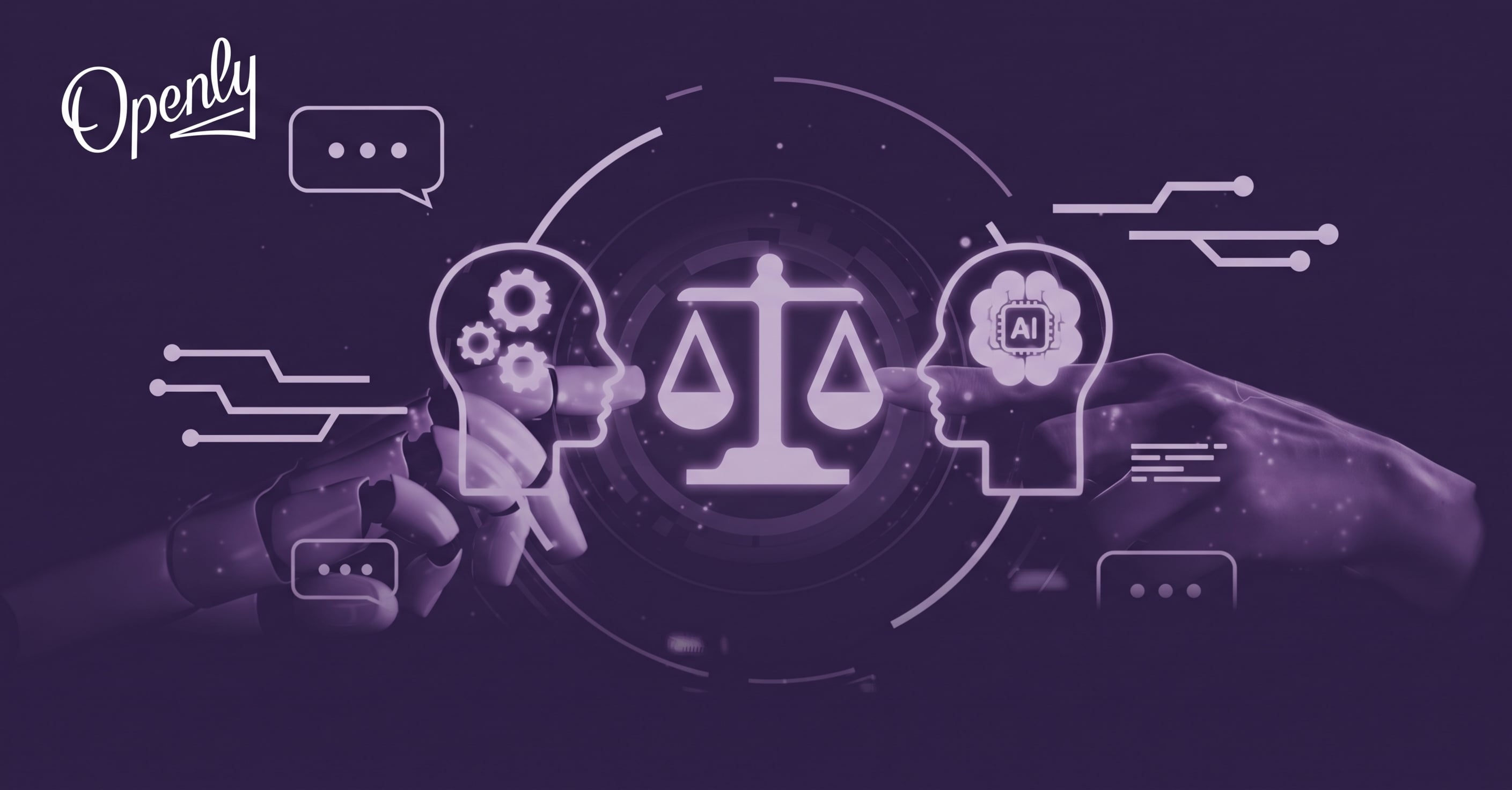
The next phase of insurance will be defined by whether the industry can use automation to strengthen the human relationships that make insurance work in the first place. The technology is already here. The question is what it should actually do.
AI can help write code, summarize documents, answer service questions, collect claims information, and take repetitive tasks off people's plates. Used well, it makes good teams faster and more focused. Used poorly, it pushes automation into places that still call for judgment, context, and empathy.
The goal isn't to replace people wherever possible. It's to make the safe path the fast path, so technology empowers people without stripping away the accountability that insurance requires.
Not every problem should be automated first
There's a temptation to automate the moment something looks repeatable. In insurance, that instinct needs discipline to temper it.
The guiding principle is simple: transactional, well-understood work could easily be automated, while work that is novel, dynamic, emotionally charged, or dependent on deep context should stay human-led. Doing the work by hand shows where the exceptions are, what people really need, and where a process breaks down. Only when that work becomes rote should automation come into play.
AI can make automation feel easier than it is. It can produce a confident answer and appear capable across a wide range of tasks. But confidence isn't the same as judgment, and speed isn't the same as responsibility.
Empowerment still requires oversight
Software development is one of the clearest examples. AI and agentic tools can write code, make a strong engineer more productive and help teams move faster, cutting repetitive work. They can also behave in ways that are non-intuitive or simply wrong, suggesting a solution that won't scale.
That makes software development a useful model for how insurance should think about AI more broadly. AI tools can empower people, but shouldn’t be used to erase human oversight or accountability. Standards don't change simply because the tools get faster. Automation can collect, route, summarize, and accelerate. Human judgment still carries the accountability.
Agents are not just another workflow
The transactional layer of insurance is likely to keep shrinking: running a quote, pulling up policy details, and processing a straightforward endorsement will continue to get faster and more self-service, and AI will play a growing role in that work.
That doesn't make the agent unnecessary. In reality, it makes the agent's real value more visible.
When every company can return a price in seconds, and when more insurance providers rely on data-driven systems, speed alone becomes less of a differentiator. What matters is the person who understands the insured's situation, sees the coverage gaps, knows the family or business behind the policy, and shows up when something goes wrong. A good agent knows which questions not to ask—and when to start listening.
The agents who thrive won't be the ones who ignore AI. They'll be the ones who lean into it, use the tools, reclaim the time, and reinvest that time in the relationships and expertise that make them hard to replace.
Explainability starts with restraint
Responsible AI means being clear about which decisions shouldn't be handed over too quickly. Insurance decisions around pricing, underwriting, and claims need to be consistent, repeatable, rational, and explainable. There's no room for hallucination in decisions that affect a person's coverage, cost, or recovery after a loss.
AI can be powerful in helping people build, test, and improve transparent models. That's different from giving AI unchecked authority over decisions that require accountability.
The advantage of agent-partnered insurance
This is also where agent-partnered insurance has an advantage that models can't replicate. A strong relationship with a strong agency creates recurring business over time, and that changes the incentives. The system is oriented around lifetime value, not just conversion.
That's why the future of AI in insurance shouldn't be framed as humans versus machines. The more useful question is whether the technology strengthens the relationship between the insurance provider, the agent, and the policyholder. That's the work ahead: not replacing the human relationship, but making it easier to deliver when it matters most.
Frequently asked questions
Will AI replace insurance agents?
It's unlikely to replace good agents. AI will keep automating transactional tasks like quoting and simple policy changes, but the parts of the job that depend on trust, context, and judgment — understanding a client's situation, spotting coverage gaps, and showing up after a loss — remain human work. AI shifts where an agent's value comes from more than it removes the need for one.
What insurance work is best suited to automation?
Transactional, well-understood, repeatable work: collecting information, summarizing documents, routing requests, and answering routine service questions. Novel, dynamic, emotionally charged, or context-heavy situations are better kept human-led.
Should AI make pricing, underwriting, or claims decisions on its own?
Those decisions need to be consistent, repeatable, rational, and explainable, so they shouldn't be handed to a system that can't meet that bar. AI is valuable for helping people build, test, and improve transparent models, which is different from giving it unchecked authority over decisions that affect a person's coverage, cost, or recovery.