
A great home insurance claims experience in 2026 comes down to five things: how fast the claim resolves, how clearly the settlement is explained, whether the insurer updates you without being chased, how useful its digital tools are, and whether a real person is there when the claim gets complicated. Price gets all the attention when you shop, but the claim is the part of the policy you actually live through. A burst pipe, a damaged roof, or a kitchen fire is the moment the coverage you bought becomes the service you receive.
Why does the claims experience matter more than price alone?
The claim is the product; the premium is just what you pay to be ready for it. Most homeowners shop on price because it's the easiest number to compare, so it wins the decision. But you don't find out whether a policy is any good until you file.
Satisfaction is measured across several dimensions now, not just "did I get paid?". Homeowners weigh whether the settlement was fair, whether they trust the insurer, how fast it moved, the quality of the people they dealt with, and how easy the whole thing was. The rest of this article covers what "great" looks like on each of those.
What factors make up a great claims experience?
Five things separate a good claim from a bad one. Here's what each looks like when it's done well:
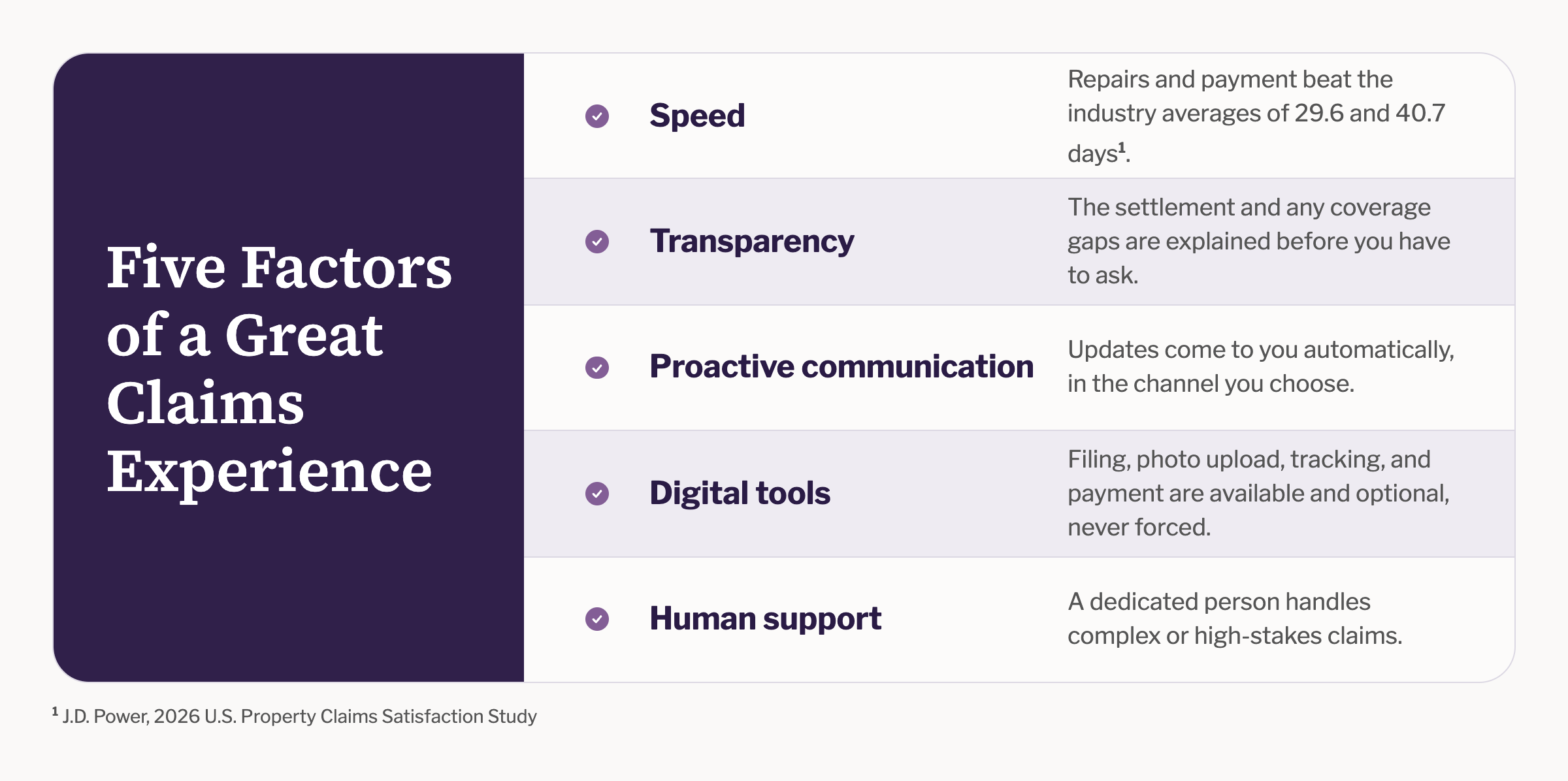
How fast should a home insurance claim be resolved?
Speed is damage control, not just convenience. Water spreads, storm exposure worsens, and a delayed start can turn a contained loss into a bigger one. The sooner repairs begin, the less secondary damage you absorb.
In 2026, the industry averages 29.6 days to complete repairs and 40.7 days from your first report of the loss to final payment, both improved from the year before, according to the J.D. Power 2026 U.S. Property Claims Satisfaction Study. Satisfaction rises the faster a claim closes: claims finished within about 10 days score far higher than those that drag past a month. One of the biggest drivers of faster repairs is a direct repair program, an insurer-vetted network of pre-approved contractors that connects you to a contractor instead of leaving you to find your own.
“Speed matters because those first two days are critical to identifying the damages, cause of loss, and being able to use our knowledge and expertise to help the customer mitigate and prevent further damage,” says Dan Rinaldi, Senior Manager of Claims at Openly.
What digital tools actually help during a claim?
Claims are digital-first now: file from your phone, upload photos instead of waiting days for an adjuster to visit, and track status online. Used well, these tools remove the dead air that makes claims stressful. The useful ones include:
- Mobile photo and video submission to document damage
- Self-service status tracking so you can see where the claim stands
- AI-assisted damage estimates that speed up the first offer
- Digital payment for faster reimbursement
The catch is that digital tools raise satisfaction only when they're optional and easy. The moment they replace human help instead of supplementing it, satisfaction drops.
“We have a variety of tools and technology that allow us to meet the insured where they are at or most comfortable in assessing the damage,” says Taylor Dennis, Senior Manager of Claims at Openly.
Why does transparency matter so much in the claims process?
A settlement you understand feels fair; a number with no explanation feels arbitrary, even when it's correct. Homeowners want to know what's covered, what isn't, and why the payment is what it is.
Much of the frustration behind "my policy didn't meet expectations" comes down to one thing: no one walked the homeowner through the estimate. Explaining the numbers up front reduces disputes and follow-up calls because you aren't left guessing. Knowing the home insurance claim process before you file helps here too.
“Most claims friction isn’t caused by the dollar amount, it’s caused by surprises. When an adjuster acts like an educator on Day 1 rather than a touchpoint on Day 21, homeowners rarely feel blindsided, even when a policy limit or deductible isn’t in their favor,” says Dennis.
What does proactive communication look like in 2026?
Proactive communication means the insurer sends updates at each step, so the burden isn't on you to call and ask where your claim stands. How you're kept informed is one of the factors homeowners weigh most heavily. Some want texts, some want a phone call, some want app notifications. The providers that score well let you pick the channel instead of defaulting everyone to one.
When do you still need personalized, human support?
Automation works for a straightforward claim. But some moments are stressful and high-stakes, and they rarely fit a template. That’s exactly when people want a real person:
- A total loss, where damage is severe enough that repairing costs as much as rebuilding, and you’re facing decisions about where to live and what comes next.
- A coverage dispute, where you need someone to explain what’s covered, what isn’t, and why the settlement landed where it did.
- A settlement that doesn’t match your expectations, where a walkthrough of the estimate can prevent a dispute before it starts.
- Damage that’s still unfolding, such as water or storm damage, where scope changes and you need clear answers as the claim develops.
The goal is right-sized support: simple claims move fast through digital channels, while complex ones get a dedicated adjuster or support rep. It ties back to trust, one of the most heavily weighted satisfaction factors, and trust is hard to build through an app alone.
“Two of our core values include empathy and urgency so our adjusters understand the importance of speed in handling claims from the time they are assigned and we rely on their years of knowledge and experience to educate their customers, set the right expectations and provide empathy throughout the process,” says Rinaldi.
What trends are shaping the claims experience in 2026 and beyond?
Several trends in home insurance are raising the bar on home insurance claims: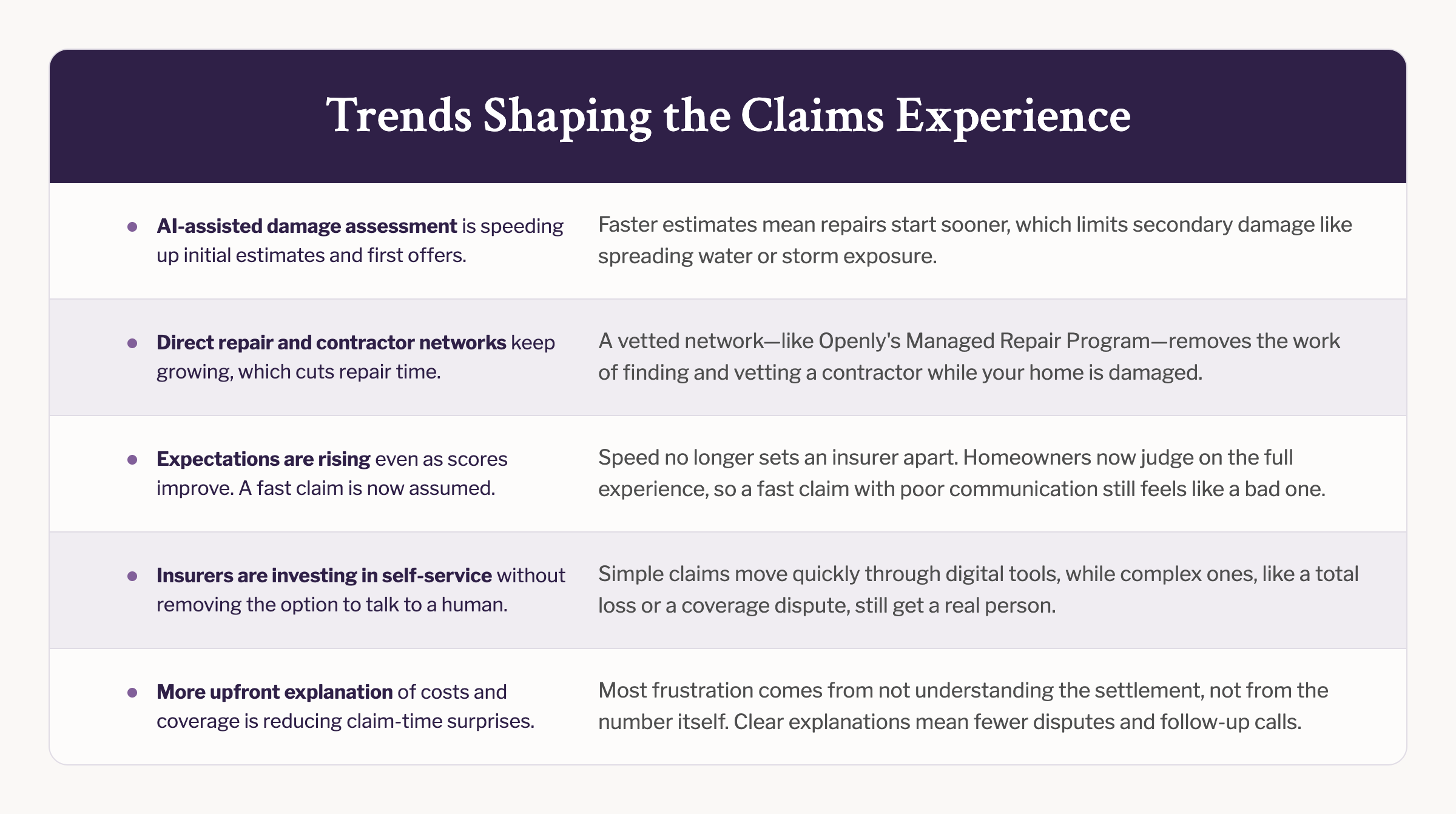
What should I look for when comparing home insurance providers?
Ask these before you choose a policy, not after you file:
- How fast do you typically complete repairs and issue final payment?
- Do you offer a direct repair or contractor network?
- What digital tools are available for filing, tracking, and documenting a claim?
- Will I get proactive updates, or do I have to check in myself?
- Is there a dedicated point of contact for complex claims?
- How do you explain settlement decisions and coverage gaps?
These answers tell you far more about claims quality than price does. It's also worth reviewing common homeowners insurance claims so you know what a typical claim involves.
What sets Openly’s claims experience apart?
Openly is a home insurance company built around the factors above: speed, transparency, communication, and real human support when it counts. Claims are handled in-house by a specialized team averaging 15 years of experience, rather than routed to a third-party administrator, so the person helping you knows the policy and the process.
Rinaldi says the team can “lean on our experience to help them with finding the right contractors, securing temp housing, and helping them put things back the way they were before the loss occurred.”
Openly's model pairs a direct carrier relationship, backed by an AM Best-rated carrier, with your independent agent, so you get both digital convenience and dedicated human support during a claim. If you want comprehensive home insurance coverage with a claims experience built around these principles, an agent can walk you through it.
A great claims experience in 2026 comes down to five things: speed, transparency, proactive communication, useful digital tools, and human support when it matters. Together they define claims satisfaction far better than premium ever could. When you compare policies, weigh the claims experience most heavily, because it's the part of the policy you'll actually live through. Find an independent agent to see how Openly's claims process is built around what homeowners really need.
FAQs about an effective home insurance claim experience