
The Midwest has long been celebrated as America’s heartland, for its affordable cost of living, and for its stunning seasonal changes. From the Great Lakes to the plains of Kansas, the Midwest faces a unique combination of risks that every homeowner should understand—particularly when it comes to protecting your most valuable asset.
Table of Contents:
- Severe thunderstorms and hail
- The threat of tornadoes
- Water and flooding risks
- Winter storms and ice dams
- Protecting your home
At a glance:
- Severe thunderstorms and hail are the Midwest's most frequent cause of property damage, causing billions in losses annually.
- Winter weather creates multiple hazards including ice dams, roof collapse, and burst pipes, most of which can be prevented through proper insulation, ventilation, and maintenance.
- Regular policy reviews are essential, as insurance needs change as home values increase, improvements are made, and new personal belongings are acquired.
1. Severe thunderstorms and hail
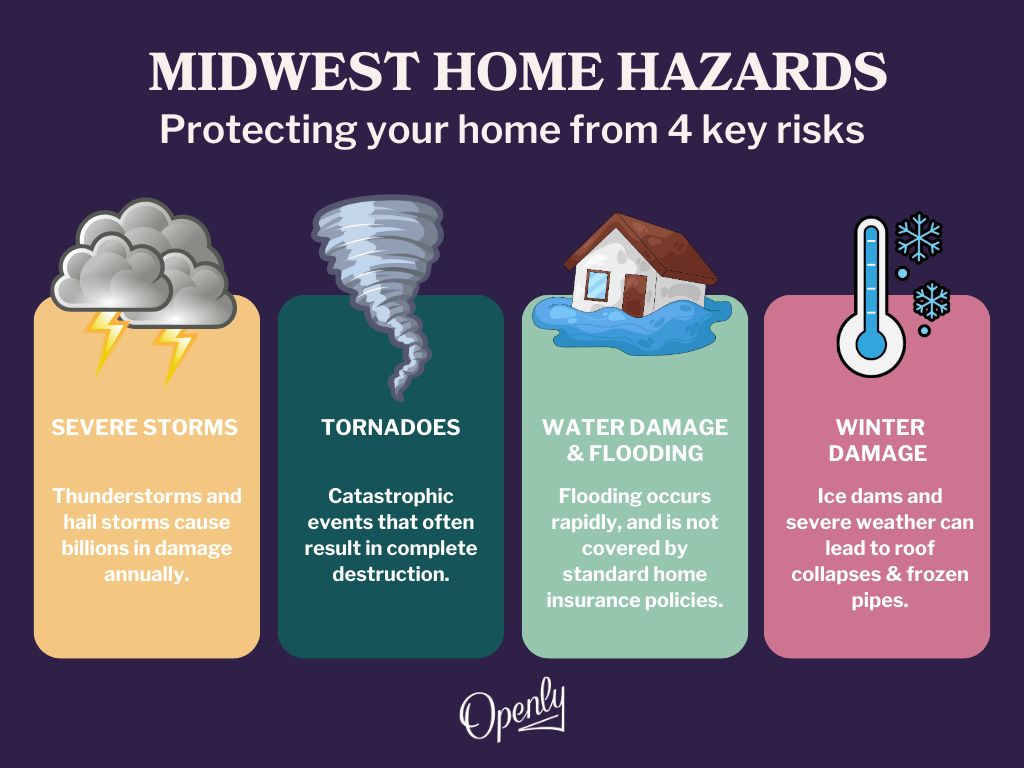
Unlike coastal areas which are often focused on hurricanes, the Midwest is dominated by severe storms, which include thunderstorms, hail, and tornadoes, and are the region’s greatest cause of property damage. These storms are not only common, but are also increasing in frequency and intensity, impacting insurance rates in states like Nebraska, Iowa, and Missouri.
While tornadoes grab headlines, severe thunderstorms and hail occur at a higher rate of frequency and cause billions in property damage every year. These storms bring damaging winds, lightning, and hail that can range from pea-sized pellets, to softball-sized balls of ice.
Hail is particularly destructive to roofs, siding, and windows, often leading to expensive claims. A single hailstorm can damage thousands of homes in a matter of minutes in areas like Nebraska and the Dakotas.
What to do after a severe storm
After a major storm—once it is safe to do so—homeowners should inspect their property for damage. Damage can include dented gutters, roof vents damage, and bruised siding. Roof damage may not be visible from the ground so after a significant storm, consider having a professional inspect your roof.
It is important to fully understand your policy’s roof coverage limits and exclusions. Different insurance providers—and different policies—have different coverages. Typically, hail damage is covered, but the age, materials, and condition of your roof are also factors in your coverage levels.
2. The threat of tornadoes
One of the most common hazards people think of when they hear Midwest hazards are tornadoes. Tornado Alley is placed squarely in this part of the country. This coalescence of weather patterns creates perfect conditions for both severe thunderstorms and tornadoes.
Oklahoma, Kansas, Nebraska and Iowa see dozens, if not more tornadoes annually, but no Midwestern state is immune to this destructive force of nature. These storms can develop rapidly, leaving only minutes for preparation and the damage from tornadoes can be catastrophic, ranging from missing shingles and broken windows to complete structural devastation and loss of life.
Preparing for tornadoes
Standard home insurance policies typically cover damage from tornadoes under windstorm coverage, but understanding your policy's specifics is imperative for your well-being. Be sure to familiarize yourself with your deductible—some home insurance policies have separate deductibles for wind or hail damage. We also recommend homeowners keep a detailed inventory of their personal belongings in case of a loss.
Most importantly, have a safe place to go if you live in a tornado prone region. Storm shelters aren't simply investments in the safety of you and your family, they also provide peace of mind during tornado season.
3. Water and flooding risks
An important fact that many homeowners do not realize, is that while floods are the most common natural disaster nationwide, flood damage is rarely covered by standard homeowners insurance policies.
It’s important to note that a mortgage company may mandate a flood insurance policy should the property be located in a flood plain. Even if the homeowner does not carry a mortgage, it is highly recommended that a homeowner obtain a flood policy, should they live near a river like the Mississippi, in a low-lying area, or near any significant body of water where flooding may affect the home. If you are unsure about your current level of coverage, contact your insurance agent to discuss your needs and concerns.
But flooding isn’t the only water risk homeowners in the Midwestern states face. Heavy rainfall from severe storms can cause sewer backup and overwhelm a home’s drainage system. Water damage from a failed sump pump or from backed up sewers and drains can cause major damage. Carefully review your home insurance policy to confirm whether or not you have coverage for this type of damage. If not, contact your insurance agent to discuss your options for adding an endorsement for water backup or sump pumps.
Preventing water damage
Flood insurance is available through the National Flood Insurance Program (NFIP) or private insurers, and you don't need to live in a high-risk flood zone to purchase it.
For other types of water damage—such as frozen pipes, sump pump failures, or water backup—its important to know where your water shut-off valve is located and ensure that all members of your household can access it quickly in the event of an emergency.
It’s also important to regularly inspect your roof, gutters, and plumbing, and replace aging components, like water heater supply lines before they fail and cause substantial water damage.
4. Winter storms and ice dams
Winters in the Midwest can be brutal. Heavy snow, ice storms, and temperatures well below zero can create their own set of hazards for homeowners. The region experiences prolonged cold snaps and significant snow accumulation which can test even the most well-maintained homes.
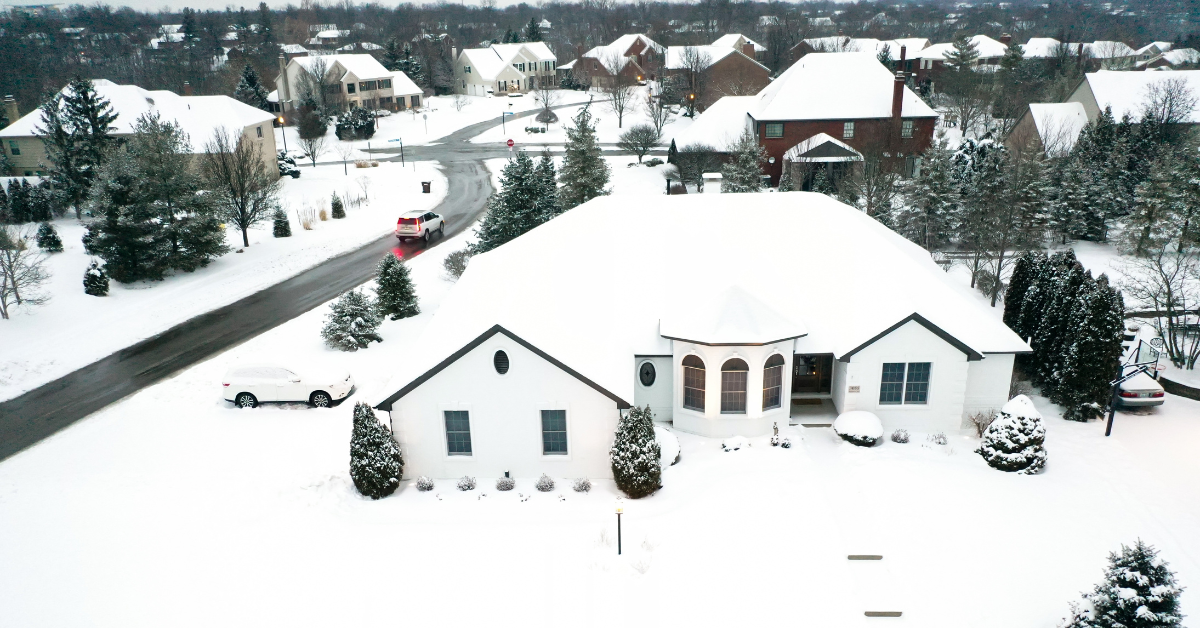
Ice dams form when heat escapes through the roof and melts snow, which then refreezes at the edge of the roof, creating a barrier that allows water to enter the home under your shingles. The constant melting and refreezing of water can cause extensive damage to insulation, attics, and interior ceilings and walls.
Snow weighs more than you might think, the weight of which can put stress on roofs, particularly in older homes or those with flat or low-pitched roofs. Wet, heavy snow loaded with accumulated ice can add even more weight to a roof’s structure.
Frozen pipes are another common winter problem, leading to costly water damage when they burst. When water freezes inside of pipes, it expands and creates pressure that can crack or rupture the pipe, resulting in thousands of dollars in damage.
Preventing ice and snow damage
Prevention is a homeowner’s best defense against costly winter damage.
- Homeowners should ensure their attic is properly insulated and ventilated to help prevent ice dams.
- During cold snaps, let faucets drip and keep cabinet doors under sinks open to allow warm air to circulate around pipes to prevent pipes from freezing.
- If you expect to leave your home vacant for any extended amount of time during winter, you may want to consider maintaining a minimum temperature to protect your home.
- Should you experience heavy snowfall, consider hiring a professional to safely take care of snow accumulation.
- Review your policy to understand coverage and any exemptions for snow and ice damage to your roof.
Protecting your home
Understanding hazards is only the first step in protecting a home from hazards in the Midwest. Here are practical actions every Midwest homeowner should consider:
- Regular maintenance matters. Keep trees trimmed away from your home, maintain your roof and gutters, and make small repairs before they become big problems.
- Document everything. Maintain a detailed home inventory with photos or videos of your belongings, if you can, and store important documents such as insurance policies and receipts for valuable items, in a safe place like a fire and waterproof safe.
- Review your coverage regularly. Insurance needs change as a home's value changes, as new possessions are acquired, or as improvements are made. An annual policy review with your insurance agent helps prevent coverage gaps.
- Understand deductibles and coverage limits. Know whether coverage limits would truly rebuild the home or replace your belongings at current prices, and make sure deductibles are amounts you can afford to pay out-of-pocket.
- Consider additional coverage. Depending on circumstances, homeowners may benefit from additional coverage such as endorsements for specific high-value items like jewelry and collectibles.
Living in the Midwest offers undeniable appeal, but being prepared for the region's unique hazards is essential for protecting your investment and your peace of mind. The right insurance policy is more than just a requirement—it's a safety net that allows you to enjoy your home without anxiety over "what if."
When you understand the specific hazards Midwestern homes face, you can make informed decisions about your coverage, no matter what the Midwest throws your way. If you have coverage questions or want to ensure you're protected against specific hazards, reach out to an independent insurance agent who understands the unique challenges of insuring Midwest homes.
At Openly, we're committed to helping homeowners understand their risks and getting them with coverage that meets their needs. Visit openly.com to learn more, get a quote, or find a local agent near you who can help ensure greater security for you and your home. Your future self will thank you.
We provide this information to help you understand insurance. Any coverage is subject to the terms of your policy. Please refer to your policy and declarations page for complete terms, conditions, exclusions and coverage details. Openly may provide links that lead to an external website that may promote goods and services that Openly does not endorse. We are not responsible for the content, claims, or representations made on the linked website. Please review their terms and policies before engaging with any offerings.
1 Adam B. Smith. “2024: An Active Year of U.S. Billion Dollar Weather and Climate Disasters.” NOAA. Published 10 January 2025. Accessed 27 January 2026. https://www.climate.gov/news-features/blogs/beyond-data/2024-active-year-us-billion-dollar-weather-and-climate-disasters
2 Insurance Journal Staff Reports. “Central US Severe Weather Outbreak Caused Billions in Damages, AccuWeather Says.” Insurance Journal. Published 20 May 2025. Accessed 23 January 2026. https://www.insurancejournal.com/news/Midwest/2025/05/20/824523.htm
3 NOAA. “Severe Weather 101.” NOAA National Severe Storms Laboratory. Updated 2 December 2024. Accessed 23 January 2026. https://www.nssl.noaa.gov/education/svrwx101/hail/
4 FEMA. “Floods Can Happen Anywhere – Be Prepared with Flood Insurance.” FEMA. Published 4 August 2025. Accessed 23 January 2026. https://www.fema.gov/blog/floods-can-happen-anywhere-be-prepared-flood-insurance