Roof problems often go unnoticed until they become expensive. Knowing the warning signs your roof needs to be replaced can help you avoid emergency repairs and protect your home. From aging materials to visible damage and interior leaks, recognizing early indicators allows you to plan ahead instead of reacting under pressure.
How long does a roof typically last?
Roof lifespan varies significantly based on the roofing material used, your local climate conditions, and how well the roof has been maintained over the years:
- Asphalt shingles—15-25 years
- Metal roofing—40-70 years
- Tile or slate—50-100 years
- Flat or low-slope roofs—10-20 years
It's worth noting that roof age can factor into home insurance considerations. As roofs approach or exceed their expected lifespan, insurers may require inspections or adjust coverage terms.
1. Your roof is near or past its expected age
Even if your roof looks fine from the ground, age alone increases the likelihood of failure. Roofing materials naturally deteriorate over time due to constant exposure to sun, rain, wind, and temperature fluctuations.
Planning a roof replacement before you're forced into an emergency situation gives you control over timing, contractor selection, and budget. It's far better to replace a roof on your schedule than to scramble for repairs after a major storm causes sudden failure.
2. Missing, cracked, or curling shingles
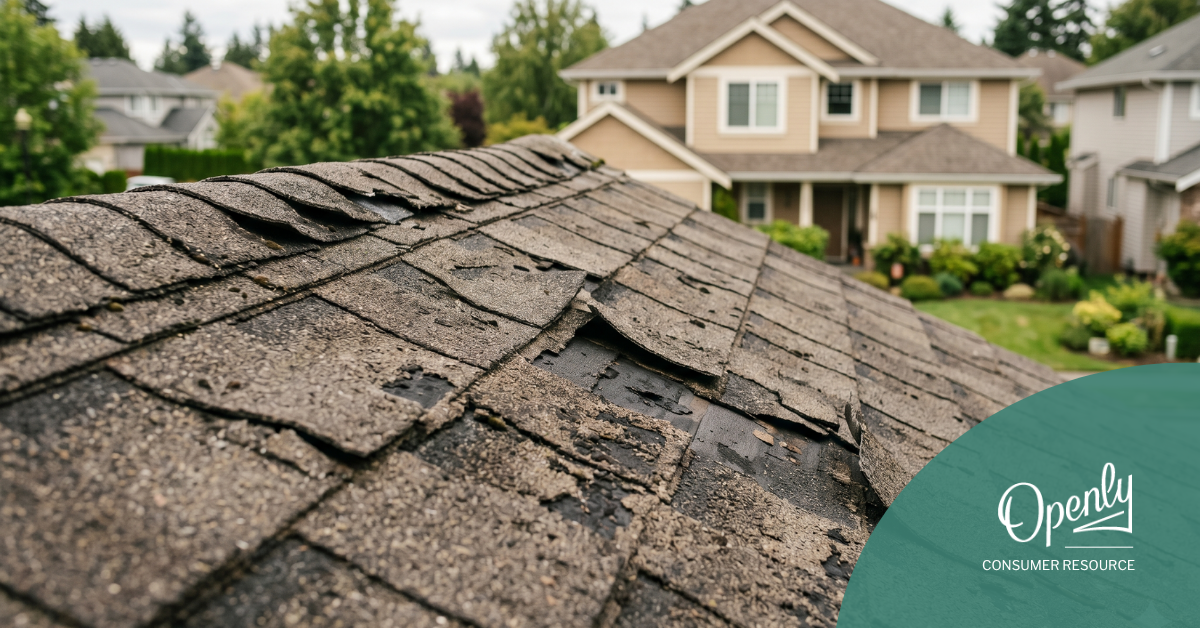
Visible shingle damage is one of the easiest warning signs to spot, even from ground level. Look for shingles that are missing entirely, cracked down the middle, or curling up at the edges.
When shingles fail, they expose the underlayment and roof decking to water intrusion. A few damaged shingles can usually be replaced individually, but widespread shingle failure across large sections of the roof signals that more restoration may be necessary. If you notice shingle damage or if repairs from a few years ago are already failing again, it's time to consider full roof replacement.
3. Granules in gutters or bald shingles
Asphalt shingles are covered with ceramic granules that shield the underlying asphalt from UV radiation, provide fire resistance, and give shingles their color and texture. As shingles age, they gradually shed these granules—a natural but concerning sign of deterioration.
Common signs of excessive granule loss include:
- Accumulation of dark, sand-like granules in your gutters and downspouts
- Shingles that appear smooth, shiny, or discolored instead of textured
- Bare patches where the black asphalt backing shows through
4. Roof leaks or water stains inside the home
Interior warning signs often indicate that roof damage has progressed beyond the surface level. Watch for these telltale indicators inside your home:
- Brown or yellow stains on ceilings or walls
- Damp or compressed attic insulation that's lost its fluffy texture
- Musty odors in upper-level rooms or the attic
- Visible mold growth on attic rafters or ceiling surfaces
5. Sagging or uneven roof lines
If you notice any sagging, dipping, or waviness in the roof line, this may be a warning sign that requires attention. Sagging may point to structural damage in the roof decking, often caused by prolonged moisture exposure that has rotted the wood.
Never ignore a sagging roof. This condition can worsen rapidly and may pose safety risks. A professional roof inspection can determine the underlying cause and whether the roof requires immediate replacement or if repairs can extend its life.
6. Frequent repairs in the same areas
If you find yourself calling a roofing contractor to fix the same problem area repeatedly, it's a clear signal that localized repairs are no longer effective. A planned slope or roof replacement gives you a fresh start with a full warranty, eliminates the cycle of repairs, and provides peace of mind that your home is protected.
7. Storm damage that weakens the roof
Severe weather events—high winds, hail, heavy rain, and snow accumulation—can significantly reduce your roof's remaining lifespan, even if the damage isn't immediately obvious from the ground. Wind can lift and loosen shingles without tearing them off completely, compromising their seal. Hail creates bruising and dents that weaken shingles and accelerate deterioration. Heavy snow loads can stress roof structures, while ice dams can force water under shingles.
After any severe weather event, schedule a professional roof inspection even if you don't see obvious damage.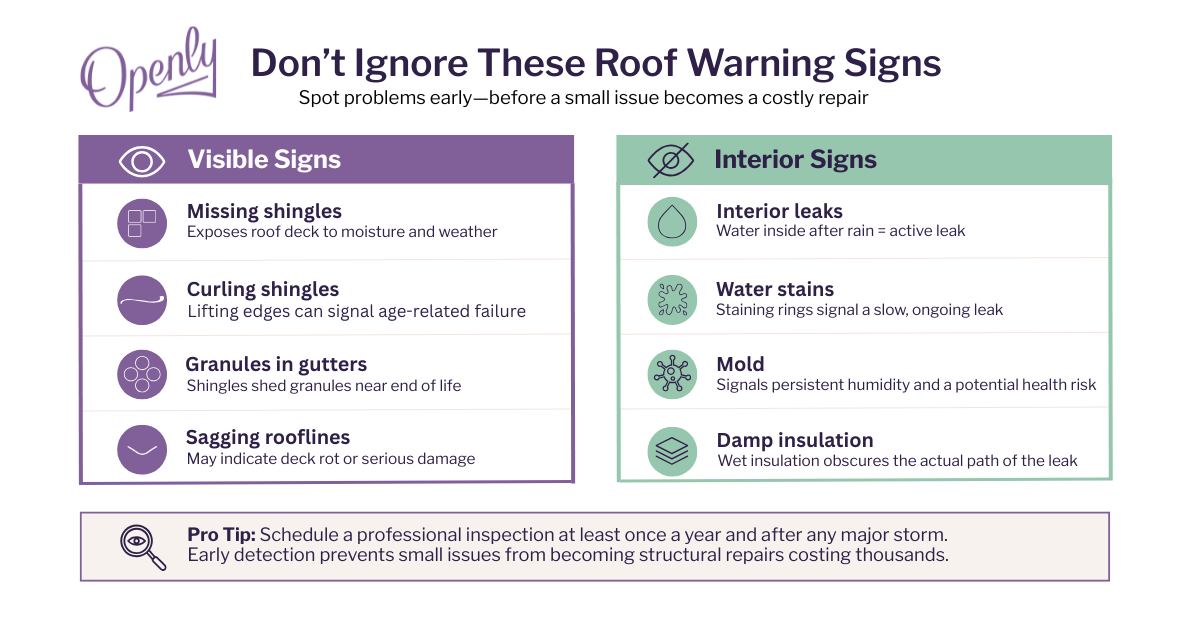
When should you get a professional roof inspection?
Consider scheduling a professional inspection in these situations:
- As your roof approaches its expected lifespan
- After major storms
- When multiple warning signs appear
The goal of inspections isn't to create anxiety but to empower you with information, giving you a clear picture of your roof's current condition, its remaining serviceable life, and whether you should start planning for replacement.
Why roof condition matters for long-term home protection
Your roof serves as your home's primary defense against the elements, and its condition directly impacts your property's overall health and value. A well-maintained roof delivers several critical benefits:
- Prevents water damage including rot and mold growth
- Protects your home's structural stability
- Reduces unexpected replacement costs and secondary damage
If your roof is showing any of these warning signs—or nearing the end of its lifespan—it’s time to take action. Scheduling a professional inspection now can help you avoid costly surprises and plan your next steps with confidence. A proactive approach ensures your home stays protected and your budget stays under control.
FAQs about roofs
We provide this information to help you understand insurance. Any coverage is subject to the terms of your policy. Please refer to your policy and declarations page for complete terms, conditions, exclusions and coverage details. Openly may provide links that lead to an external website that may promote goods and services that Openly does not endorse. We are not responsible for the content, claims, or representations made on the linked website. Please review their terms and policies before engaging with any offerings.