
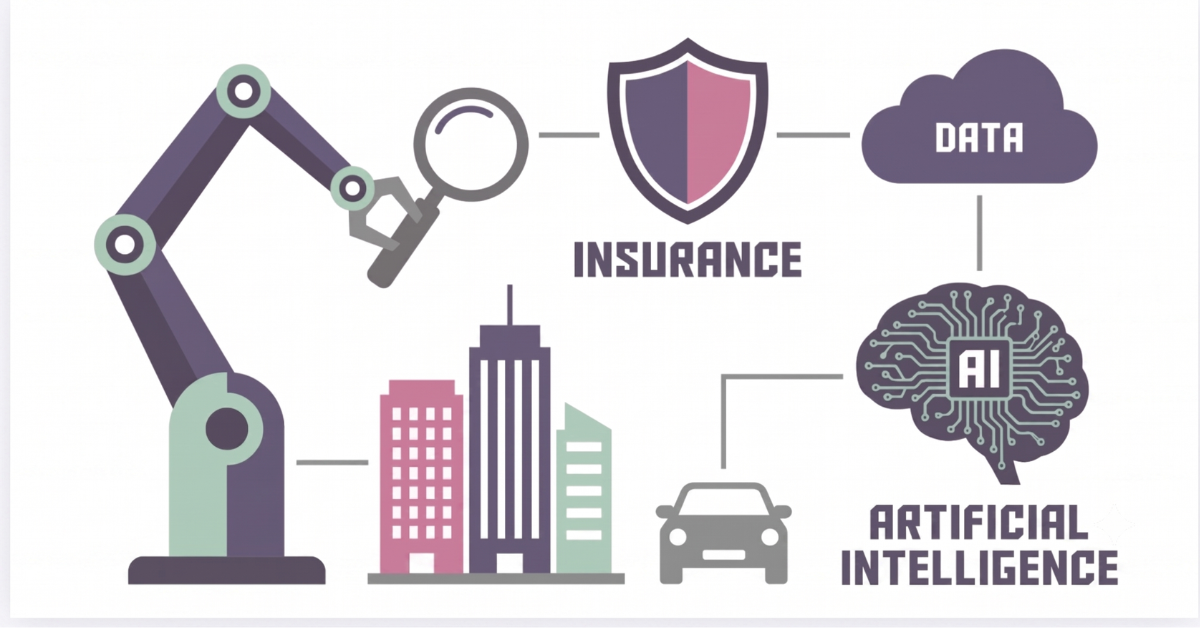
Insurance has fallen hard for Artificial Intelligence (AI) faster than it has learned to trust it.
AI-led automations are flooding the market, in claims handling, underwriting, and even customer service. But little of it has been tested at scale, and we know the technology still hallucinates. And this isn’t a temporary bug waiting on the next release to fix. In September 2025, OpenAI published research concluding that hallucination is a fundamental, stubbornly persistent challenge for every large language model, and that no amount of scale, search, or reasoning will push real-world accuracy to a perfect 100%.
In other words, the people closest to the technology are telling us that confident, wrong outputs are a structural feature of it, not a phase we'll grow out of.
So here's the question I keep coming back to: what happens when the industry faces our first high-profile failure—a privacy breach, a flawed decision, a model that behaves badly under real-world load? When that day comes—and I believe it's soon—the question will be simple: which carriers can reconstruct exactly what happened, and which can only point at a vendor.
This isn't a far-off problem for the industry to study. It’s a problem that runs through every part of the insurance business—pricing, claims, distribution—down to the agencies placing the policies. And it starts with a risk almost nobody is naming.
When everyone buys the same AI
There's a quiet consensus forming across insurance: buy the AI product, plug it into your existing stack, and call it a strategy. It's fast, it's defensible, and many carriers are doing some version of it right now.
Most of these tools are built on similar models, trained on similar data, and configured in similar ways. When every carrier runs the same vendor AI through underwriting and pricing, every carrier drifts toward the same decisions. The appetite differences that make a market—the reason an agent can shop a hard-to-fit risk to five carriers and get five genuinely different answers—begin to flatten. The risk that used to find a home now gets the same automated shrug everywhere. That becomes the opposite of differentiation.
Independent agencies feel this first because their value rests on carriers having genuinely different appetites and pricing. When that logic is shaped by the same vendor model across the industry, the diversity erodes.
I keep asking my own version of this: what are we losing if the whole industry drifts toward the mean? There are real opportunities for a healthier competitive landscape when each company brings a fresh perspective. So the question isn't whether the industry uses AI. It's what each company builds it on, and whether they can still retain their individual fingerprint when it matters.
The model was never the edge
Here's the part the vendor pitch leaves out: the AI model is the commodity. If the model is the same for everyone, it can't be the thing that sets a carrier apart. What sets carriers apart is the data the model can see. The most common mistake I see is treating AI as a feature you bolt on rather than a capability you build into. Few carriers are looking at their entire enterprise ecosystem and asking the hard questions: What needs to change about all of these integrations to make real use of AI? What does this look like five years from now?
At Openly, we invested in our own stack: policy management, pricing, underwriting, research, model development, and billing. The data flows into a central, well-structured data lake. Any system can talk to any other system, and any engineer can contribute to any system. With the help of AI, we now even have non-engineers suggesting code changes. That cohesive, open platform is what makes it possible to integrate AI deeply rather than layer it onto a single feature or pain point. It also means we’re not beholden to the timelines of third-party insurance SaaS vendors to build the features we want.
I'd put one caveat on "own your stack," because it gets stated too broadly. The point was never to build every system in-house. We buy tools, too. We’re not anti-vendor, we’re pro-owning the data model that everything else sits on top of. The goal is a unified data model, so that whatever is deployed, built or bought, operates on the full context of a policy and a risk rather than a fragment of it. A vendor tool sitting on a common data model is leverage, and the same tool bolted onto silos is just another silo.
That's also why the model itself is a detail, not a dependency. Openly has been model-driven since day one. Every pricing and every underwriting decision is modeled by a computer. How those models are trained and which algorithms they use is an implementation nuance, not a major refactor to how our systems work. Swapping in a better model is routine, whereas re-architecting around one is a multi-year project. The numbers bear this out: we made 85 model updates in 2025—nearly two every week. That isn't a series of disruptive overhauls. Rather, it's a fast, fluid feedback loop that lets us continuously recalibrate as conditions change, without ever betting the business on a single model.
You can catch up—but only if you start now
None of this means a company is locked out if it's behind. Can you catch up? Yes. Most carriers have migrated to cloud-native technology, and they can move quickly there. That's not the challenge.
The challenge is whether your system architecture is ready for AI, and whether that architecture is within your control. You need AI to solve your claims problems, your mispricing problems, your service problems, and that solution-architecting takes deep understanding of your systems and data, plus the right talent inside your organization to make sense of it. That’s a multi-year investment. The carriers serious about it needed to start yesterday, but the next best day is today.
If your AI vendor disappeared tomorrow, what would actually change about how the business operates? If the answer is 'almost everything,' that's not an AI strategy.
The proof is in how fast you can change
Owning that data architecture is what sets you apart. It also does something less visible: it decides how fast you can change when something breaks. There's a hidden cost in most carrier engineering that explains why some move and some don't. Call it the collaboration tax: the coordination overhead of reconciling systems that don't speak the same language. The integration meetings, the data-mapping, the negotiation between teams who each own a different slice of a fragmented stack. That tax scales with every system you add and with every team you grow.
A unified data model collapses it. When everything speaks one schema, there's less to coordinate, and a small team can ship changes that would take a fragmented organization quarters. We run a half-dozen models per state across 24 states with fewer than 10 engineers, and we update them in days—most of that just testing. We can do that because we built the pipeline for it, not because we added people. But that speed was never really about engineering. It’s about who’s on the other end of it—a policyholder whose claim was just denied, an agent who has to explain a rate that jumped overnight. When a small, unblocked team owns the whole pipeline, that person gets an answer the same day. When coordination is the bottleneck, their question lands in a vendor's backlog, and they wait.
Regulators are already asking
The reason all of this stops being philosophy in 2026 is regulatory, and it's not hypothetical. Openly’s privacy, security, and AI teams are tracking the NAIC AI Systems Evaluation Tool closely. It isn't a law but rather a structured framework that gives regulators a standardized way to examine how insurers use AI. The pilot went into effect in March 2026 and is expected to move toward nationwide adoption at the fall national meeting (November 2026).
What this points to is a world every carrier should be preparing for. Every AI model, every variant, every vendor integration is tracked and documented with a clear purpose and clear oversight. If you own your stack, building that inventory is straightforward because you control the pipeline. If you're running six different vendor black boxes, it becomes a nightmare of chasing SOC reports and vendor attestations.
Then there's accountability when AI makes a mistake. The first big, high-profile mistake is going to set precedent for what carriers must demonstrate: an understanding of how these tools work, how they were tested, and how they perform across protected classes. When that mistake lands, the carriers who can respond cleanly are the ones who can account for every decision, not the ones who moved fastest.
A test worth running
Here's a test any insurance leader can apply: if your AI vendor disappeared tomorrow, what would actually change about how the business operates? If the answer is "almost everything," that's not an AI strategy. What matters now is who owns the technology and who rents it.
As 2026 plays out, the companies that treated AI as something you buy will learn what it truly costs, in renewals, agency relationships, and the first hard conversation with a regulator. The ones that built it on something they own will be easier to do business with, and able to move the metrics that actually matter: expense ratio, loss ratio, and retention. The agent is the human face of decisions these systems make, and that relationship turns on whether the carrier behind it can show its work.